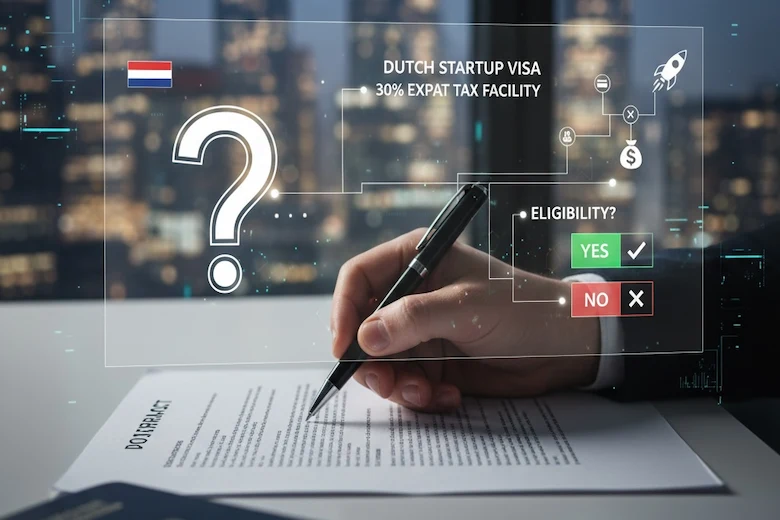
startup visa programs have become increasingly relevant for founders who want to build, test, and scale a business from within Europe. For international entrepreneurs, this route can offer more than a legal entry point; it can become part of a wider plan for market access, business credibility, family relocation, and long-term European Residency. Still, a startup visa is not designed for every person with a business idea. Most programs expect a clear innovation element, a realistic business model, credible founder capability, and a strong explanation of why the business belongs in the destination country.
For families and founders, the real decision is not simply which country sounds attractive. The stronger question is whether the startup, the founder profile, the funding plan, the market opportunity, and the residence objective all support the same strategy. That is why this article connects startup visa planning with legal confidence, market intelligence, and long-term mobility rather than treating it as a simple form-filling process.
What Is a Startup Visa?
A startup visa is usually a residence route for non-EU founders who want to establish or develop an innovative and scalable business in a country that has created a specific immigration pathway for startup talent. Depending on the country, the route may be called a startup residence permit, startup visa program, entrepreneur residence, or innovation-based founder route. There is no single eu startup visa that applies across all member states; each jurisdiction evaluates applicants through its own immigration, business, and innovation criteria.
Startup Visa vs Entrepreneur Visa
A Startup Visa is typically more focused on innovation, scalability, technology, ecosystem fit, and founder readiness. By contrast, an Entrepreneur Visa may cover a broader range of active business owners, self-employed professionals, consultants, or founders with a viable business plan. In practice, some countries use similar language for both routes, so the legal definition in the destination country matters more than the marketing name of the visa.
Startup Visa vs Company Registration
Registering a company is an administrative and legal act, while applying for a startup visa is an immigration process. A founder may need a company, a business address, tax registration, or a local structure, but Company Registration in Greece or company formation in any European country does not automatically create residence rights. The business setup should follow the visa strategy, not replace it.
Startup Visa vs Digital Nomad Visa
Digital Nomad Visa routes usually support remote professionals who earn income from foreign employers or clients while living legally in another country. A startup visa is different because it usually expects the founder to build or move a company into the destination ecosystem. If the applicant plans to hire locally, raise capital, join an incubator, or serve European customers, a startup route may fit better than a remote-work route.
Startup Visa Requirements
Although requirements differ by country, most startup visa programs share the same core logic: the applicant must prove that the project is innovative, viable, founder-led, and properly funded. The application is not judged only on lifestyle preference; it is usually assessed through documents, a business plan, a market case, and sometimes an external opinion from a facilitator, incubator, innovation agency, or government body.
Innovative Business Idea
The innovation requirement is often the heart of a start up visa program. Portugal, through IAPMEI, describes its StartUP Visa as a route for foreign entrepreneurs who want to create or move an innovative tech-based company to Portugal, and its evaluation considers innovation, scalability, market potential, team capacity, and qualified employment potential. IAPMEI Portugal makes this clear in its official program description.
Scalable Business Model
A local shop, a small consulting practice, or a generic service company may be a legitimate business, but it may not meet the logic of a startup visa program. The model should show how the business can grow beyond a narrow local customer base, create value in the market, and justify founder relocation. This is where market research, competitive positioning, product roadmap, and revenue assumptions become part of the immigration case.
Founder Capability
Authorities and evaluators usually want to know whether the founder can actually execute the project. Relevant industry experience, technical background, management history, ownership structure, previous traction, investor interest, partnerships, and the founder’s operational role all help show that the project is more than a theoretical idea. For founders with families, this capability assessment also matters because the residence plan may depend on the continuing credibility of the business.
Funding and Financial Capacity
Funding requirements vary, but applicants should usually be ready to document living costs, product development resources, operating expenses, and the financial ability to remain compliant during the first phase of residence. A founder who can present a realistic budget, runway, customer pipeline, and financial plan will usually have a stronger case than one who only submits a broad concept note.
Incubator, Facilitator or Endorsement
Some countries require structured support from an approved ecosystem partner. The Netherlands is a useful example: its startup residence route requires the startup entrepreneur to work with a facilitator in the Netherlands, and the permit allows the founder to stay and work as an entrepreneur for a maximum of one year. Business.gov.nl describes this facilitator-based model, and the IND also explains that advice may be requested about the facilitator, innovation, step-by-step plan, and business registration.
Legal Documents and Immigration Compliance
A startup visa application usually requires identity documents, proof of funds, criminal-record documents where applicable, health insurance, company or project documents, translations, legalization or apostille, application forms, and evidence linked to the startup assessment. The IND Netherlands highlights the importance of correct documents, and Spain’s entrepreneur visa guidance also refers to legalization or apostille and official translations for foreign documents.
Startup Visa Countries in Europe
Founders should compare countries through legal criteria, ecosystem fit, tax exposure, family needs, and renewal logic. The table below summarizes several useful reference points for startup visa planning in Europe.
Country | Route | Key consideration |
Netherlands | Startup Residence Permit | A one-year route for non-EU entrepreneurs, with an experienced facilitator as a central requirement. |
Portugal | StartUP Visa | A route for foreign entrepreneurs building or moving innovative tech-based startups to Portugal. |
Spain | Entrepreneur / Startup-Oriented Route | The activity should be innovative or of special economic interest, with ENISA involved in the project assessment. |
Finland | Startup Permit | Generally linked to founder innovation and assessment by the national startup ecosystem; must be checked before application. |
Estonia / Lithuania | Startup Visa Routes | Often focused on non-EU founders with startup committee or innovation-based assessment. |
Startup Visa Application Process
Step 1 — Define the Startup and Residency Goal
The first step is to decide whether the founder is truly trying to build a startup or is mainly looking for a residence option. If the real objective is family relocation, passive living, remote work, or investment diversification, another route may be stronger. If the objective is to build a scalable company in Europe, the startup visa logic becomes more relevant.
Step 2 — Choose the Right Country
The best country is not always the easiest country. A founder should compare startup ecosystem, target customers, language, cost of living, tax position, banking environment, access to talent, accelerator networks, and family needs. A country that works for SaaS may not work for regulated fintech, healthtech, tourism technology, or hardware.
Step 3 — Prepare the Business Plan and Pitch
The business plan should clearly explain the problem, solution, market size, revenue model, team, traction, technology, roadmap, funding plan, and expected economic value. A pitch deck may be helpful, but a startup visa file needs more than visual storytelling; it needs evidence that the company can operate, survive, and grow in the destination country.
Step 4 — Secure Facilitator, Incubator or Endorsement
Where the route requires a facilitator, incubator, or endorsement, the founder should treat that relationship as a strategic milestone rather than a technical requirement. A strong facilitator can validate the business model, guide first-year execution, and make the application more credible. The Netherlands is a clear example of a facilitator-centered approach.
Step 5 — Submit the Visa or Residence Application
Once the business assessment and documents are ready, the visa or residence application is submitted through the relevant consulate, immigration authority, digital portal, or national agency. The sequence differs by country, so founders should avoid copying a process from one jurisdiction into another.
Step 6 — Build, Report and Renew
Receiving the initial permit is not the end of the process. The founder must usually prove that the startup is active, milestones are being followed, records are maintained, and the business remains eligible for renewal or transition. A startup visa should therefore be managed as a business-compliance project, not only as an immigration file.
Benefits of a Startup Visa
Legal Residence for Founders
The main benefit of a startup visa is that it can give founders a lawful basis to live in the destination country while building the business. This can make customer development, hiring, partnerships, banking, and investor conversations more credible than trying to manage everything from outside the market.
Access to Startup Ecosystems
Many startup routes are built around the idea that founders need more than a visa. They need ecosystem access, mentors, accelerators, facilitators, investors, research networks, and local knowledge. Portugal, the Netherlands, and Spain each show this logic in different ways through innovation assessment, facilitator requirements, or public agency involvement.
Business Expansion in Europe
For companies that want to serve European customers, hire talent, or build trust with EU partners, a startup visa can become part of a market-entry strategy. It can also support a broader Residency by Investment or business mobility conversation when combined with corporate structuring and legal planning.
Family and Lifestyle Planning
A founder’s residence route can also support family planning when the country, school system, healthcare access, housing market, and long-term renewal conditions fit the family’s expectations. However, the family should not choose a route only because the lifestyle is appealing; the business must still qualify and remain compliant.
Final Words
A startup visa can be a valuable European residency route for innovative founders, but it should be treated as a strategic business and immigration decision rather than a shortcut to residence. The strongest applications usually connect innovation, market fit, founder capability, funding, compliance, and a credible reason for building the company in the destination country.
Before choosing a European residency route or property-backed program, request a structured review through Nobility Residency’s Residency-Linked Investment Advisory and European Residency & Golden Visa Advisory. A better residency decision begins with the right questions before the investment is made.