
The Blue Card is one of the most important European residence routes for highly qualified professionals from outside the EU. Unlike property-backed or investment-based routes, the Blue Card EU is connected to employment, qualifications, salary level, and national implementation rules. For skilled professionals and their families, it can become more than a work permit. It can support legal residence, career mobility, family planning, and long-term European positioning.
For Nobility Residency clients, the European Blue Card should be reviewed as part of a wider residency strategy. The question is not only whether a professional qualifies today. It is whether the route supports the family’s future, employer obligations, renewal planning, and the wider goal of legally confident European access.
What Is the Blue Card EU?
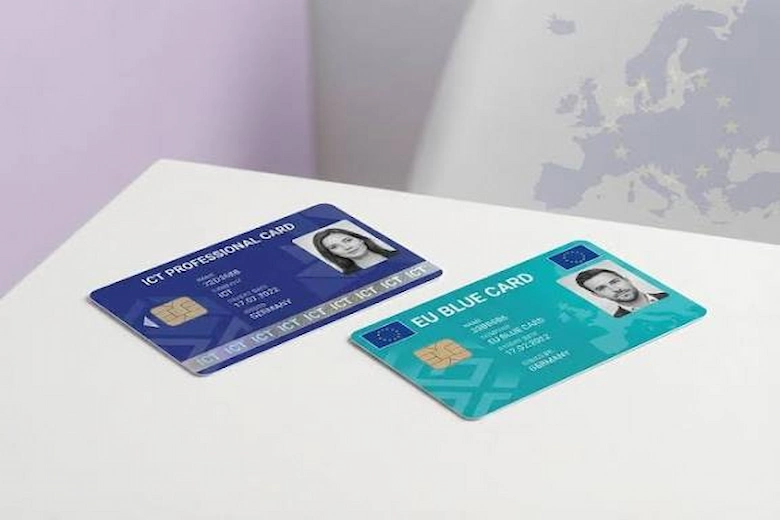
The Blue Card EU is a residence and work permit designed for highly qualified non-EU nationals who have a qualifying job offer or employment contract in an EU Member State. The EU framework sets common principles, while each participating country applies national rules on salary thresholds, application process, fees, processing time, and renewal conditions.
The EU Immigration Portal describes the EU Blue Card as a route for highly qualified workers from outside the EU to live and work in an EU Member State, provided they meet requirements such as higher professional qualifications or skills, a valid employment contract or binding job offer, and salary criteria under national rules.
In practical terms, this means the blue card european union framework is not a single identical application across every country. A client considering Germany, France, the Netherlands, Greece, Spain, or another participating country should review the national implementation, not only the EU-level concept.
Blue Card vs Other European Residency Routes
The Blue Card is different from an investment route, a Golden Visa, a family route, or a passive income pathway. It is primarily employment-based. That makes it highly relevant for skilled professionals, executives, engineers, IT specialists, healthcare professionals, academics, and other qualified applicants with a real job offer in Europe.
For families comparing employment-based options with capital-based routes, an Investment Visa may be a different strategic category. Investment routes often depend on qualifying capital or assets, while the euro blue card depends on professional qualifications, employment, and salary.
A similar distinction matters when comparing work-based residence with Golden Visa planning.
For example, a Greece Golden Visa is generally connected to qualifying investment, while a European Blue Card is connected to qualified employment. Both can support European planning, but they serve different profiles and should not be confused.
Clients considering Greece Residency may need to compare whether their profile fits a work-based route, a property-backed route, a family-based route, or another legal pathway. The right decision depends on the applicant’s background, family goals, and timeline.
Who Can Benefit from the European Blue Card?
The European Blue Card may be relevant for people who have a strong professional profile and a qualifying job offer in a participating EU country. Typical candidates may include senior professionals, IT specialists, engineers, healthcare professionals, researchers, managers, and other highly qualified workers.
Eligibility normally depends on several key elements:
- A valid employment contract or binding job offer, often with a minimum duration defined by national law
- Higher professional qualifications or, in some cases, equivalent professional skills
- A salary that meets the national Blue Card threshold
- Recognition or comparability of qualifications where required
- Compliance with regulated profession rules where applicable
- Valid travel documents, health insurance, and required immigration documentation
Because the requirements differ by country, blue card services should begin with a country-specific eligibility review. A candidate may qualify in one EU country but not in another because salary thresholds, recognition procedures, or national rules differ.
Germany as a Practical Blue Card Example
Germany is one of the most important examples because it actively uses the EU Blue Card to attract skilled professionals. According to Make it in Germany, a Blue Card applicant in Germany generally needs a specific job offer, employment of at least six months, a job matching the qualification, and a salary that meets the required threshold.
For 2026, the official Make it in Germany portal lists a gross annual salary threshold of at least EUR 50,700 for regular professions, and EUR 45,934.20 for shortage occupations where the Federal Employment Agency approval is required. Make it in Germany – EU Blue Card.
This example shows why Blue Card advice must be current. Salary thresholds and shortage occupation rules can change, and a client should not rely on outdated figures. Renewing Blue Card status also requires attention to the national rules in force at the time of renewal.
7 Legal Checks Before Applying for a Blue Card
1. Check the correct country route
The EU Blue Card is an EU-level framework, but national rules apply. The applicant should confirm which country will process the application, whether the job is located there, and how the national authority defines salary, qualifications, processing time, and renewal.
2. Check the job offer and contract
The job offer must be real, documented, and aligned with national Blue Card requirements. The employment period, salary, job title, working hours, and role description should be checked before submission.
3. Check salary thresholds
Salary is one of the most important Blue Card requirements. The salary threshold may differ by country, shortage occupation, recent graduate status, or profession. It should be checked against official national sources.
4. Check qualification recognition
Applicants may need to show that their university degree or professional qualification is recognized, comparable, or accepted under national rules. Regulated professions may require additional licensing.
5. Check family planning early
A Blue Card decision is often a family decision. Spouse and children may need dependent residence planning, documentation, timing coordination, and future renewal review.
6. Check renewal and employer-change rules
Renewing Blue Card status, changing employers, or moving between EU countries may trigger additional requirements. Applicants should understand the route beyond the first approval.
7. Check long-term strategy
The Blue Card can be a strong route for skilled professionals, but it should be evaluated against the family’s wider residency, mobility, and wealth planning objectives.
For families, Family Reunification should be reviewed before the main applicant submits the Blue Card application, especially when spouse, children, school timing, and dependent residence status are part of the plan.
For some professionals, the Blue Card is not only a work permit; it may also become part of a Second Residency strategy that gives the family a structured European base alongside their home country.
This is where global mobility planning becomes important. The applicant should understand how the Blue Card fits with travel needs, employer location, family movement, tax residence considerations, and future country transitions.


Common Blue Card Mistakes to Avoid
Many applicants treat the Blue Card as a simple employment visa. In reality, it requires coordinated legal, professional, and family planning. Common mistakes include:
- Using outdated salary thresholds
- Assuming all EU countries apply the same Blue Card rules
- Submitting a job offer that does not match the qualification
- Ignoring degree recognition or regulated profession requirements
- Planning family relocation too late
- Changing employers without checking national rules
- Assuming the Blue Card automatically creates permanent residence or citizenship
- Ignoring renewal conditions and documentation timelines
A dedicated review of European Residency Mistakes can help families and professionals avoid decisions based on assumptions rather than legal requirements.
Blue Card and Long-Term European Planning
A Blue Card can support long-term European planning, but it should not be treated as a standalone document. It sits inside a wider decision involving employment, family relocation, residence duration, tax exposure, education, and future options.
For high-skilled professionals, the bluecard program may become a first step toward deeper European integration. For families, it may be a practical route when the main applicant has a strong professional profile and the household wants structured access to Europe without using an investment-based route.
Legal confidence comes from comparing the Blue Card route against other available options. A family may find that employment-based residence is ideal. Another family may need a residency by investment route, a family route, or a country-specific residence permit. The strongest strategy is the one that matches the applicant’s real profile and long-term goals.
How Nobility Residency Supports Blue Card Planning
Nobility Residency helps skilled professionals, executives, and families evaluate Blue Card eligibility as part of a broader European residency strategy. Our advisory approach focuses on legal confidence, route comparison, family planning, and practical application readiness.
Depending on the client’s needs, this may include:
- Initial profile review for Blue Card suitability
- Country-route comparison for skilled professional residency
- Job offer and salary-threshold review at a strategic level
- Family inclusion and dependent residence planning
- Coordination with legal or local professionals where needed
- Comparison with investment, Golden Visa, and family-based routes
- Long-term planning for renewal, mobility, and future residence options
The goal is not to force every applicant into the same route. The goal is to identify whether the Blue Card is the right legal pathway for the professional, the employer, and the family.

FAQ
What are Blue Card services?
Blue Card services may include profile review, country comparison, document preparation guidance, job-offer review, family planning, renewal strategy, and coordination with legal professionals.
What is renewing Blue Card status?
Renewing Blue Card status means extending the residence and work permit under the national rules of the country that issued it. Renewal requirements should be reviewed before the permit expires.
Does the Blue Card lead to permanent residence?
It may support longer-term residence planning in some countries, but permanent residence rules are national and separate. Applicants should review the specific country route.
Can family members join a Blue Card holder?
Family members may be able to join, but the conditions, documents, and timing depend on the country. Family planning should be reviewed early.
Final Words
Plan your Blue Card route with legal confidence. Speak with Nobility Residency to review your professional profile, family needs, country options, and long-term European residency strategy before applying.